Photograph by Shamus Li
Gazing
2026
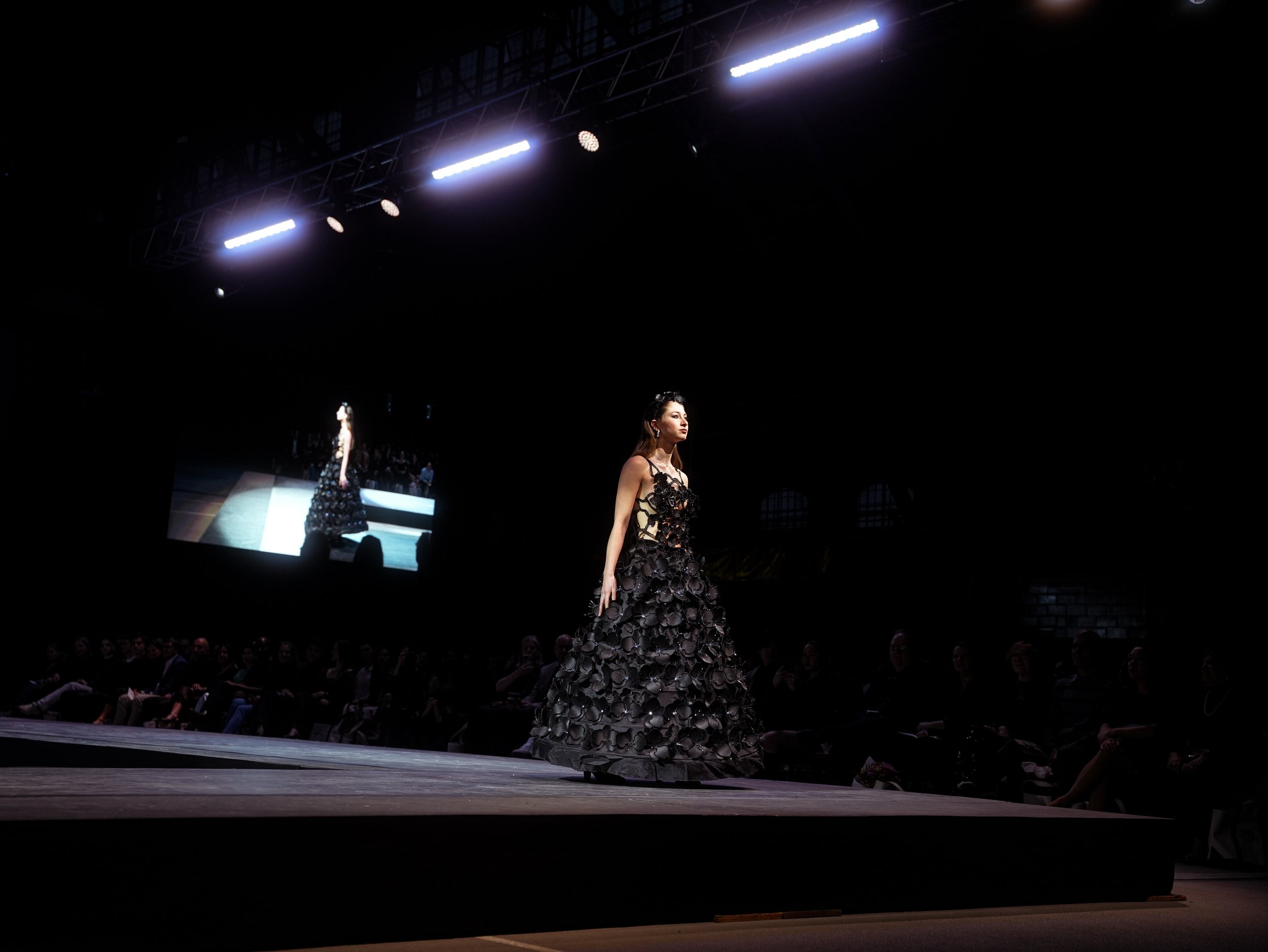
There are moments when the world feel dim… Not because light is absent, but because we forget where to look.
The Gazing Dress is an interactive wearable that reveals light in response to the wearer’s upward gaze, challenging where we choose to look for truth. This projects is funded by Backslash at Cornell Tech and debuted at New York Fashion Week 2026 and the Cornell Fashion Collective Spring 2026 Show.
What if clothing could change now just how we interact, but how we understand the world around us?
Photograph by Heather Ainsworth for NY Post
This project was born from the moment I realized how easily people form strong opinions about realities they have never lived. Where voiced with direct experience are dismissed, and narratives from a distance are treated as truth.
Growing up in Venezuela, and now living in the United States, I saw how quickly my reality was misunderstood by those observing it from afar.
Increasingly surrounded by curated stream of information, we are constantly looking down, absorbing fragments of the world through screens rather than experiencing it directly, or simply talking with the people experiencing these events. It becomes easy to feel informed, while we are actually, EXTREMELY UNINFORMED.
The Gazing Dress responds to this disconnect: sometimes, understanding requires us to change where we are looking.
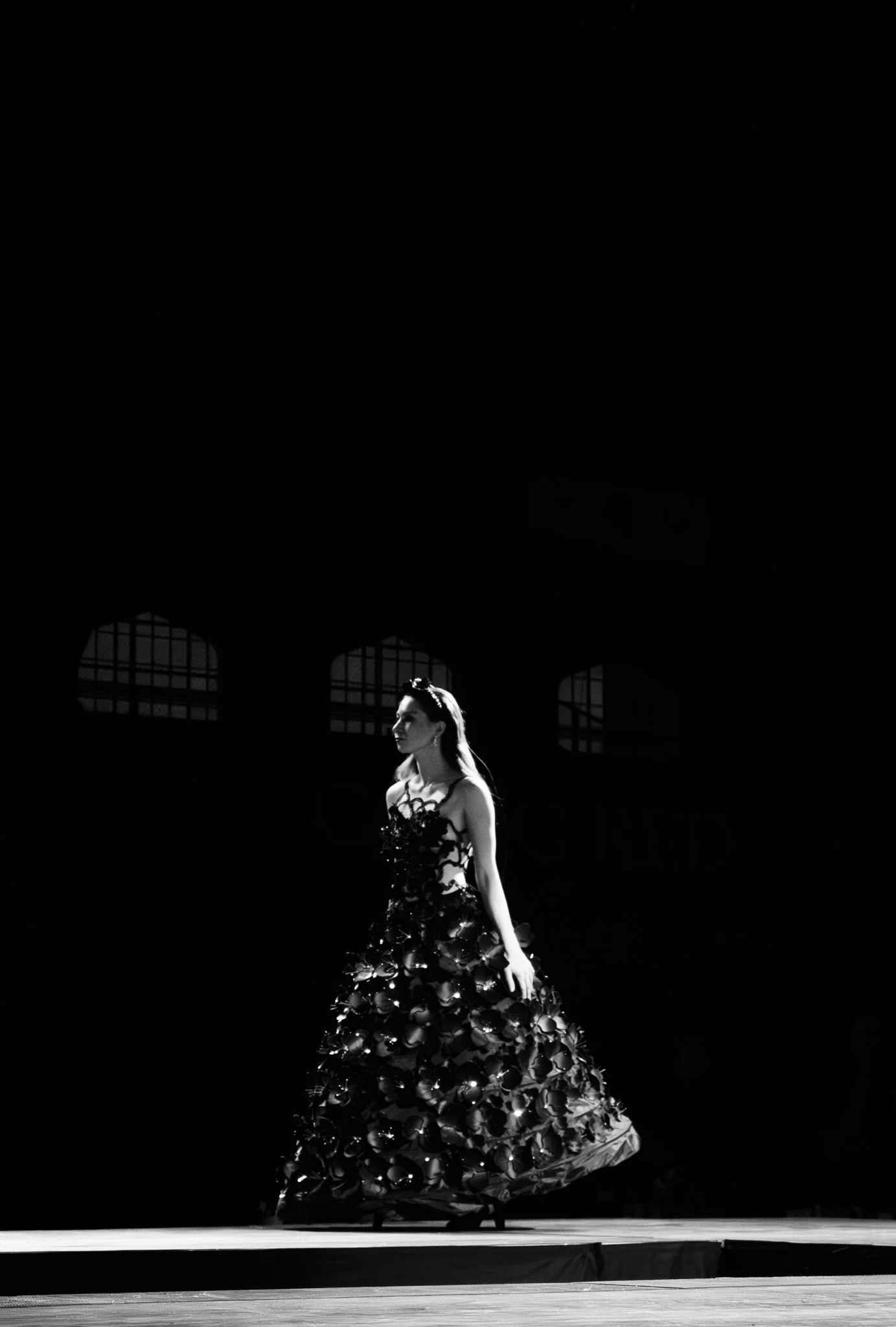
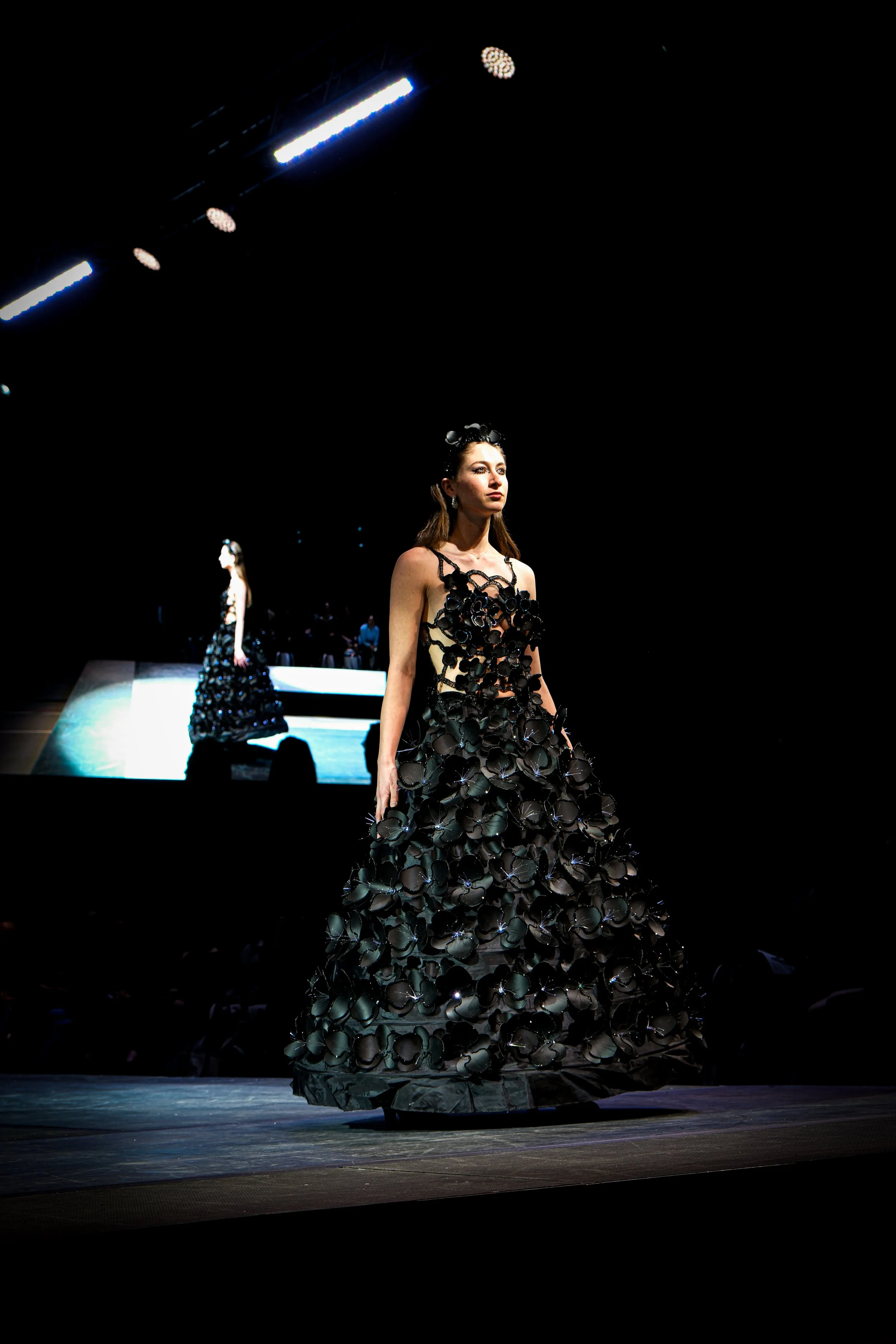
The dress does not reveal itself immediately. It remains dark… unreadable… until the wearer lifts their gaze. Only then, does light begin to emerge, traveling through the piece as clarity replaces obscurity.
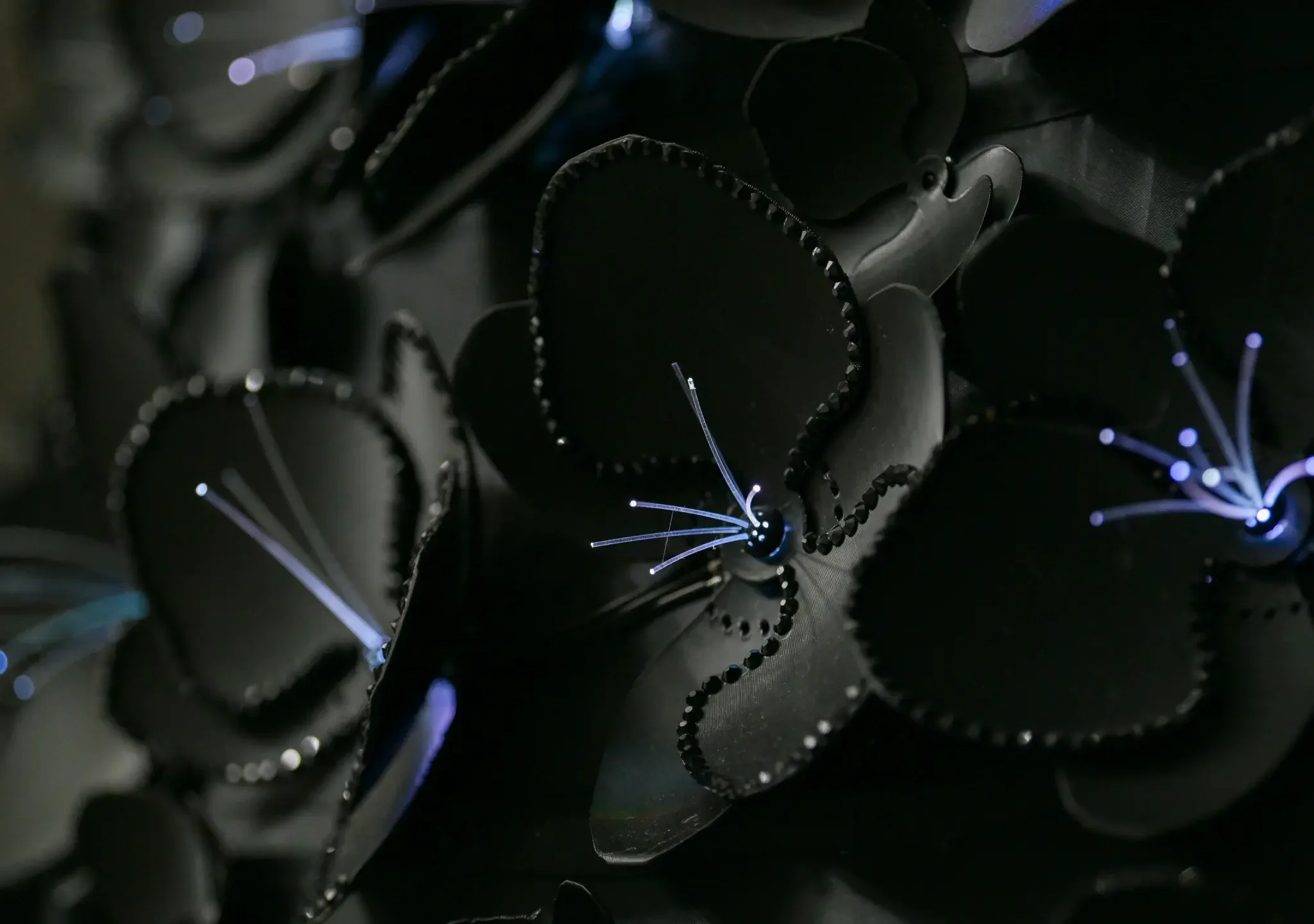
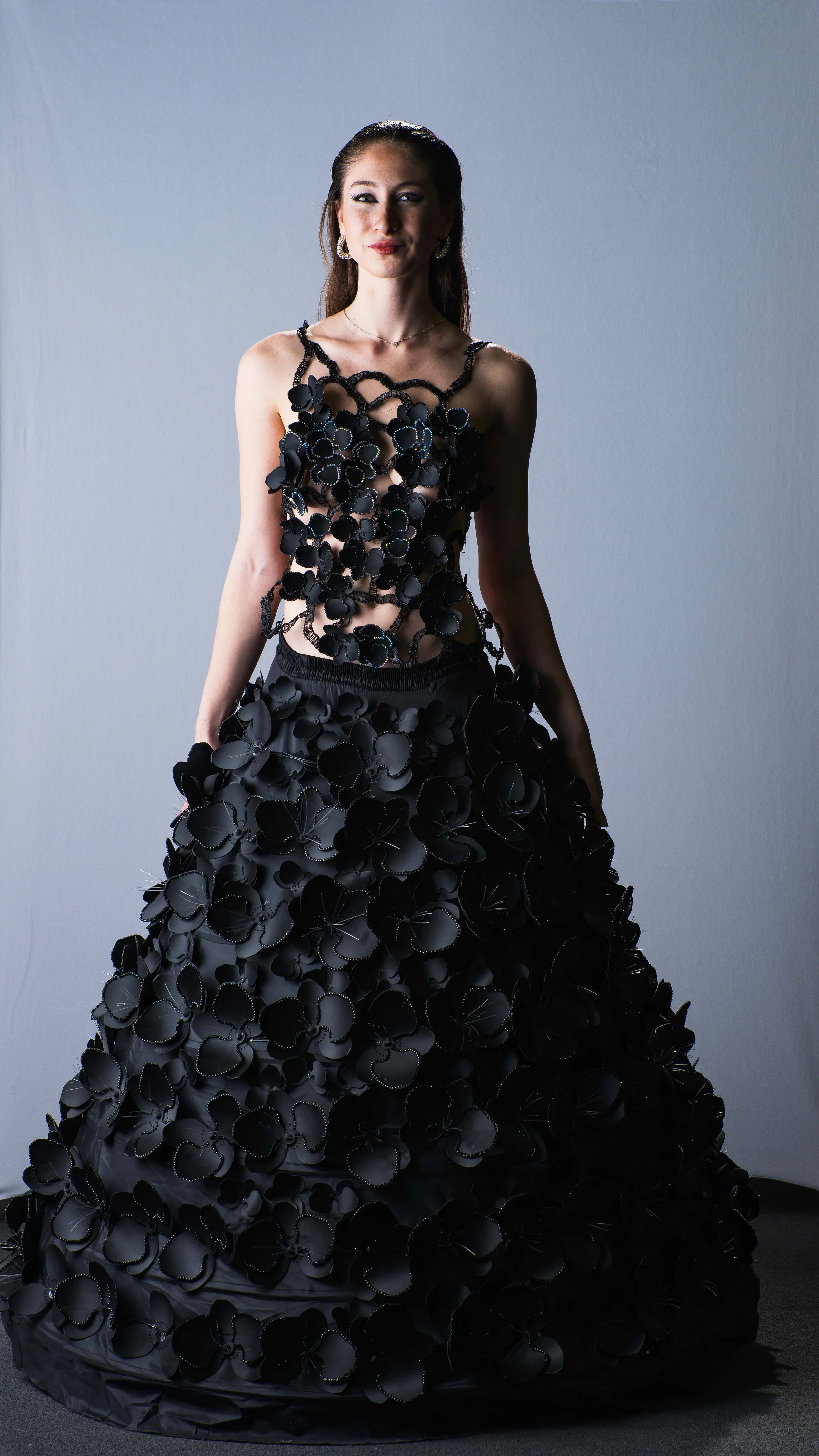
Orchids emerge from the darkness, carrying a sense of origin. Recognizable to some, invisible to others, they remain present whether or not they are understood.
Photograph by Heather Ainsworth for NY Post
Photograph by Heather Ainsworth for NY Post
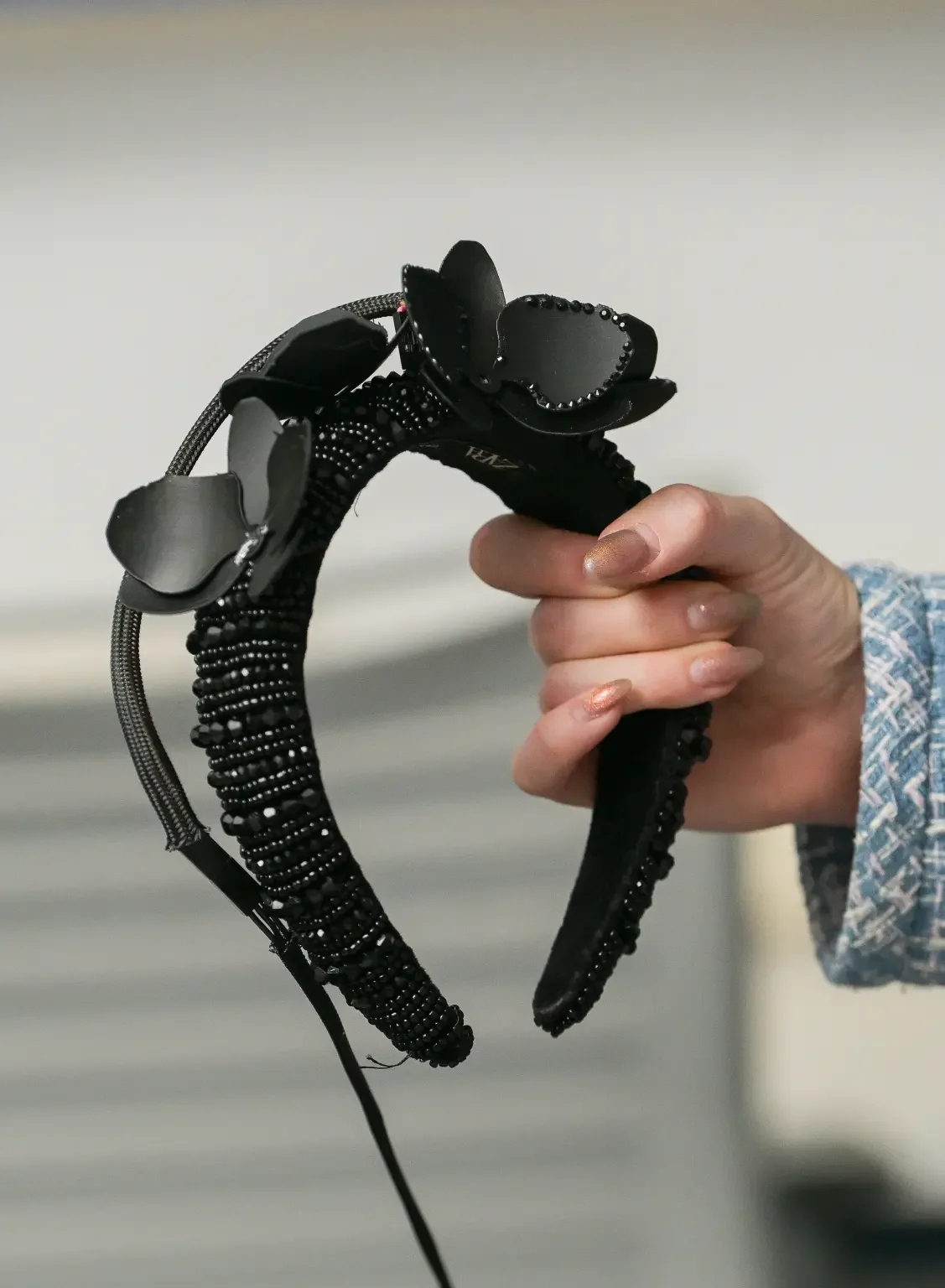
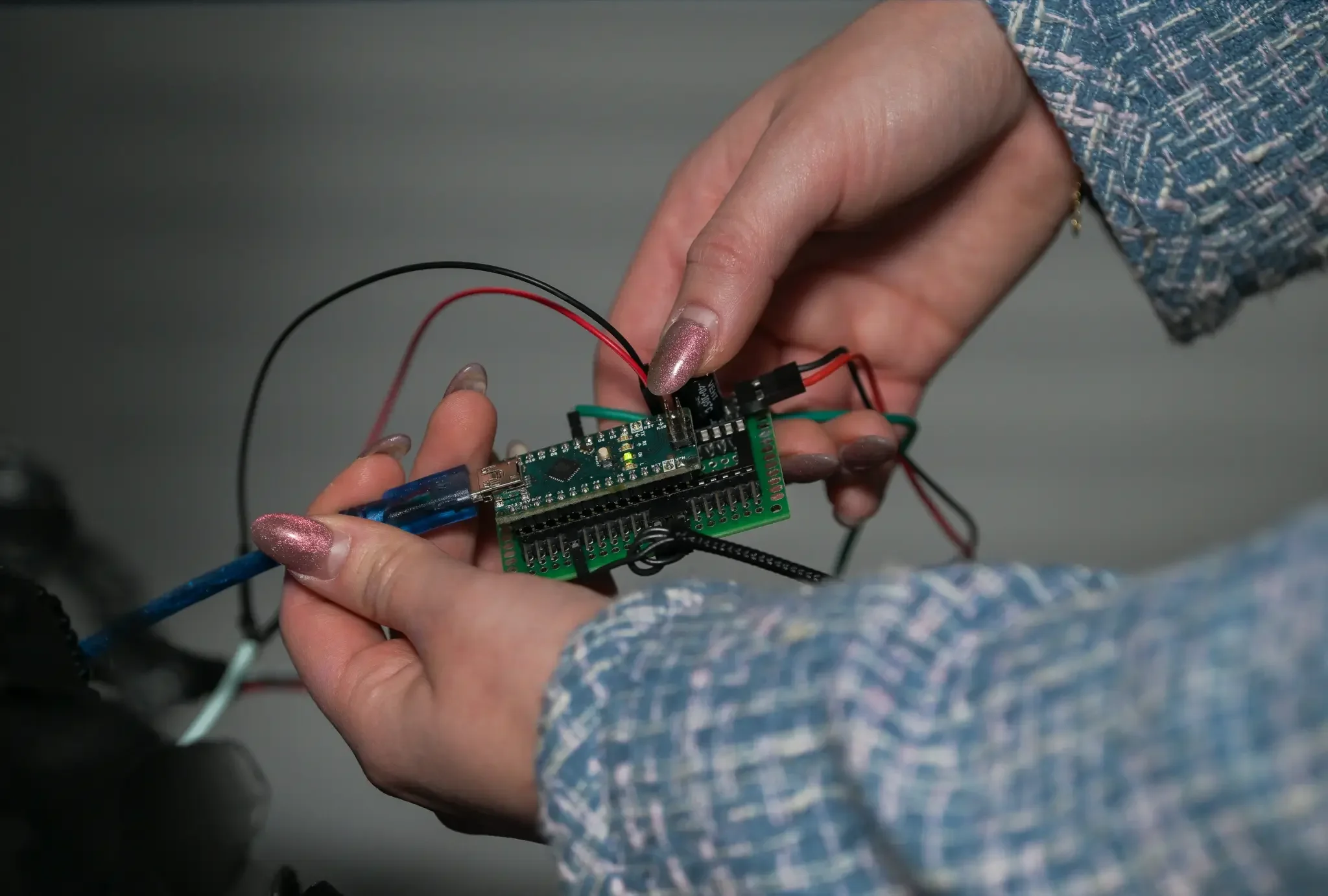
The garment responds to the wearer’s gaze direction through embedded motion sensing in the headpiece, allowing shifts in posture to directly influence the behavior of the piece. As the wearer’s gaze rises, illumination begins to propagate through the dress gradually from the bottom up.
Rather than acting as a passive object, the dress required participation. It responds only when the wearer engages with it in a specific way. This interaction transforms a subtle human gesture into a visible, evolving experience.
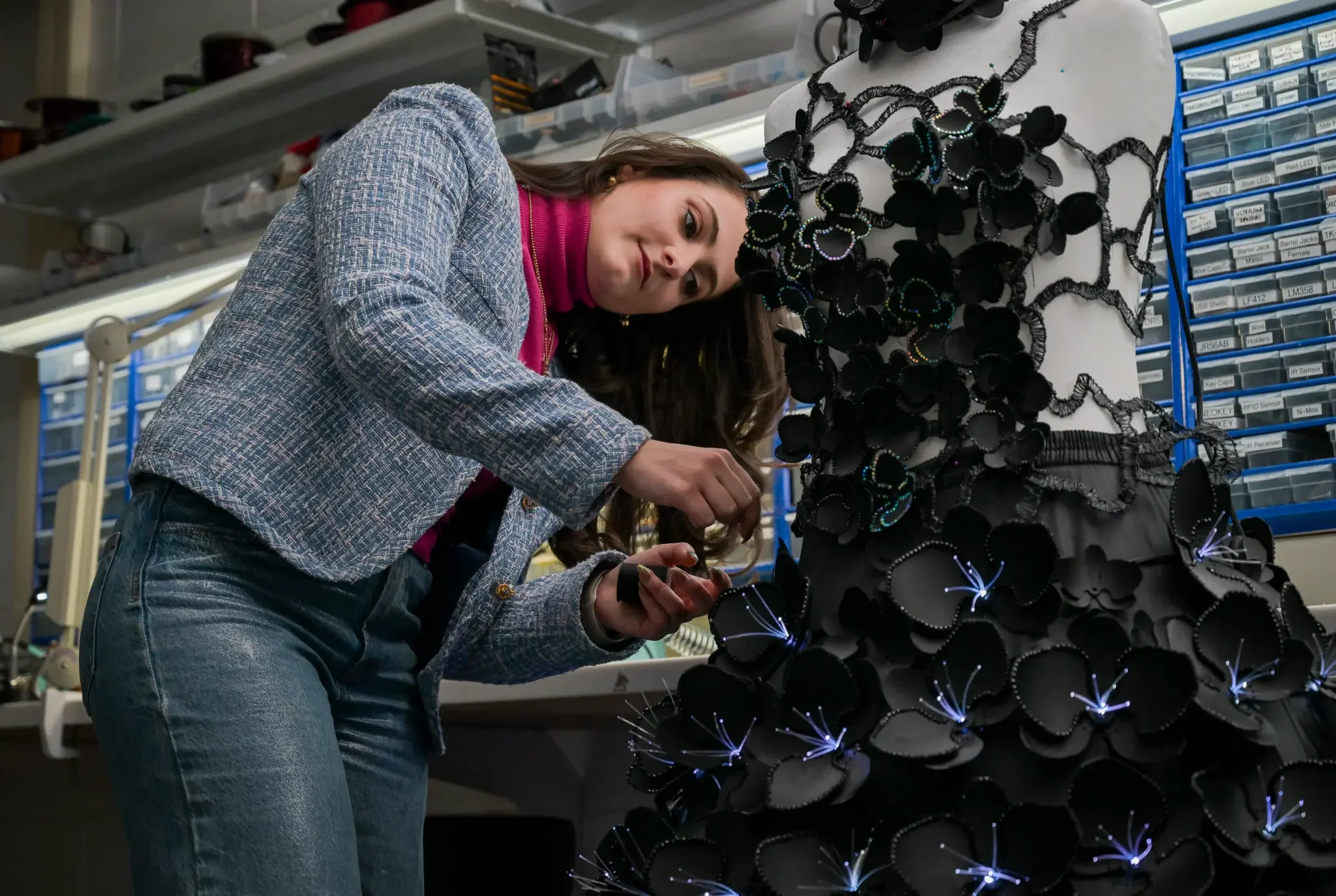
The dress is constructed using a combination of additive manufacturing techniques. The base of the top structure is printed in Thermoplastic Polyurethane (TPU), while the flowers along the whole dress are 3D printed with Polylactide (PLA). Every flower is hand-finished with beadwork. At the center of each flower, bundles of optical fibers are embedded directly above individual light sourced. This allows light to travel through the fibers and diffuse outward, creating a soft, internal glow rather than a direct emission.
The system is controlled through a motion-sensing module embedded int he headpiece, which detects changes in orientation and translates them into a continuous lighting response across the garment.
Photograph by Heather Ainsworth for NY Post
Cornell Fashion Collective Spring 2026
Photograph by Eli Brown
Photograph by Alex Lau
Photograph by Nathan Bo
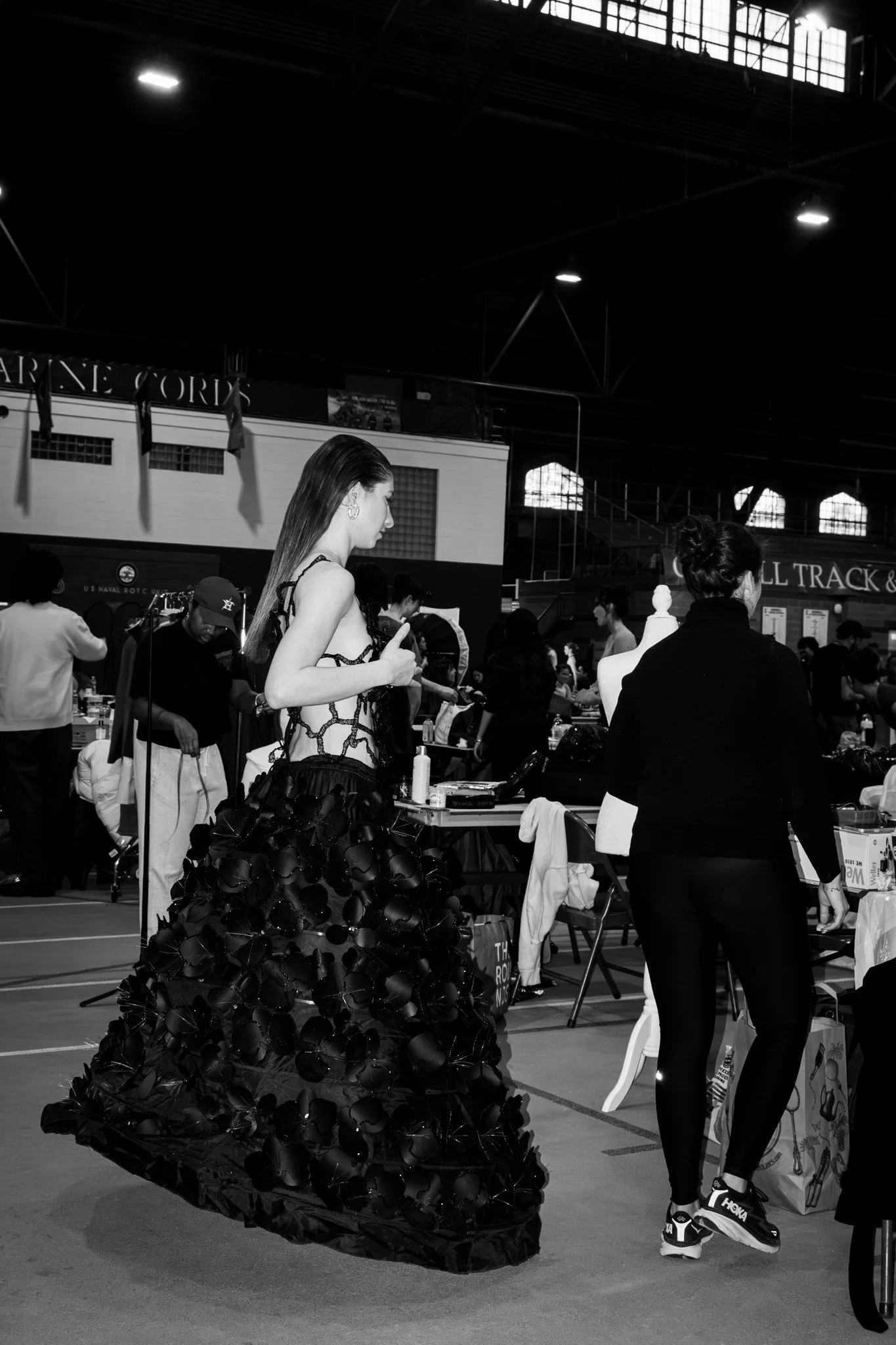
Photograph by Alex Lau
New York Fashion Week 2026
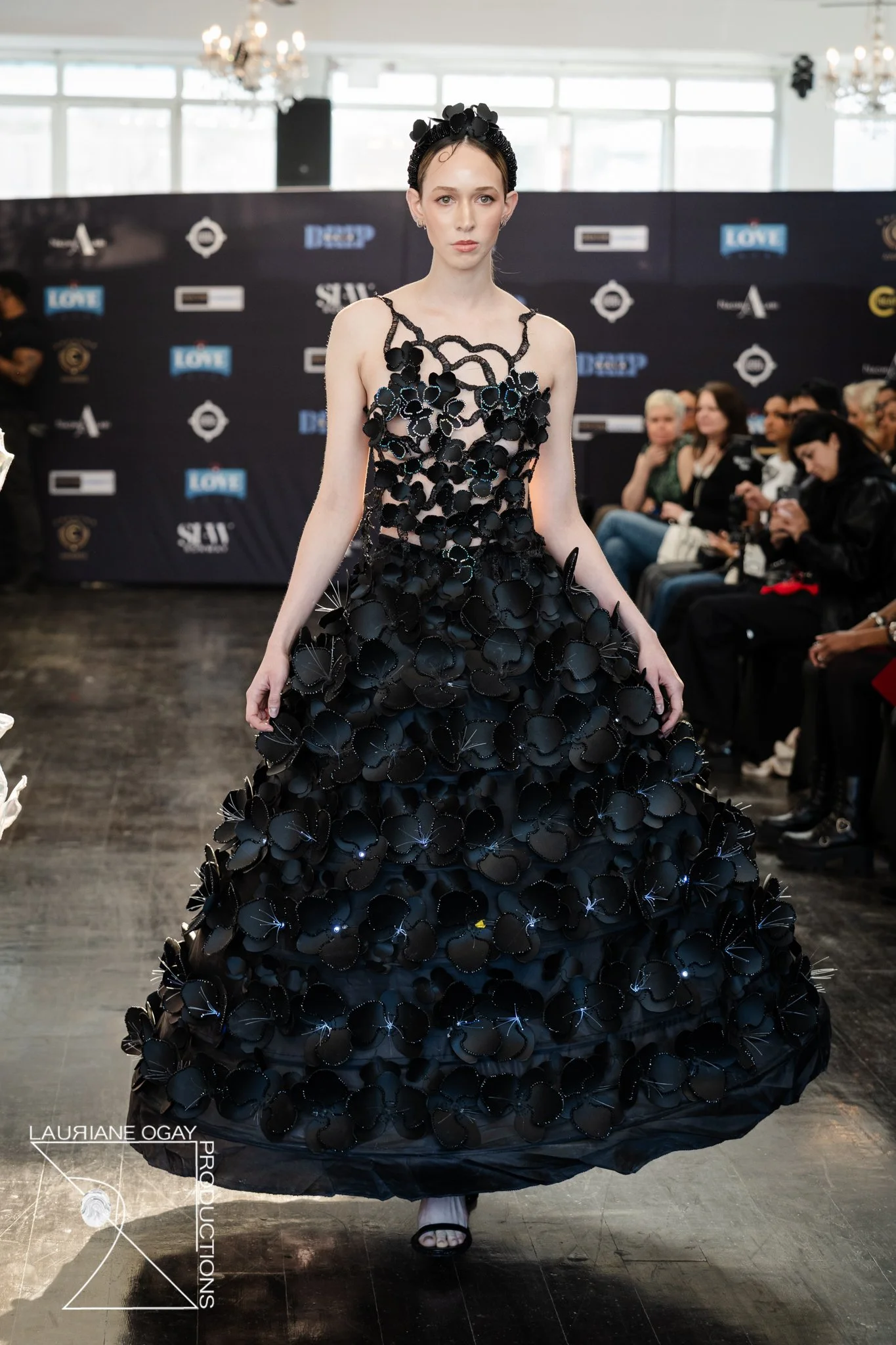
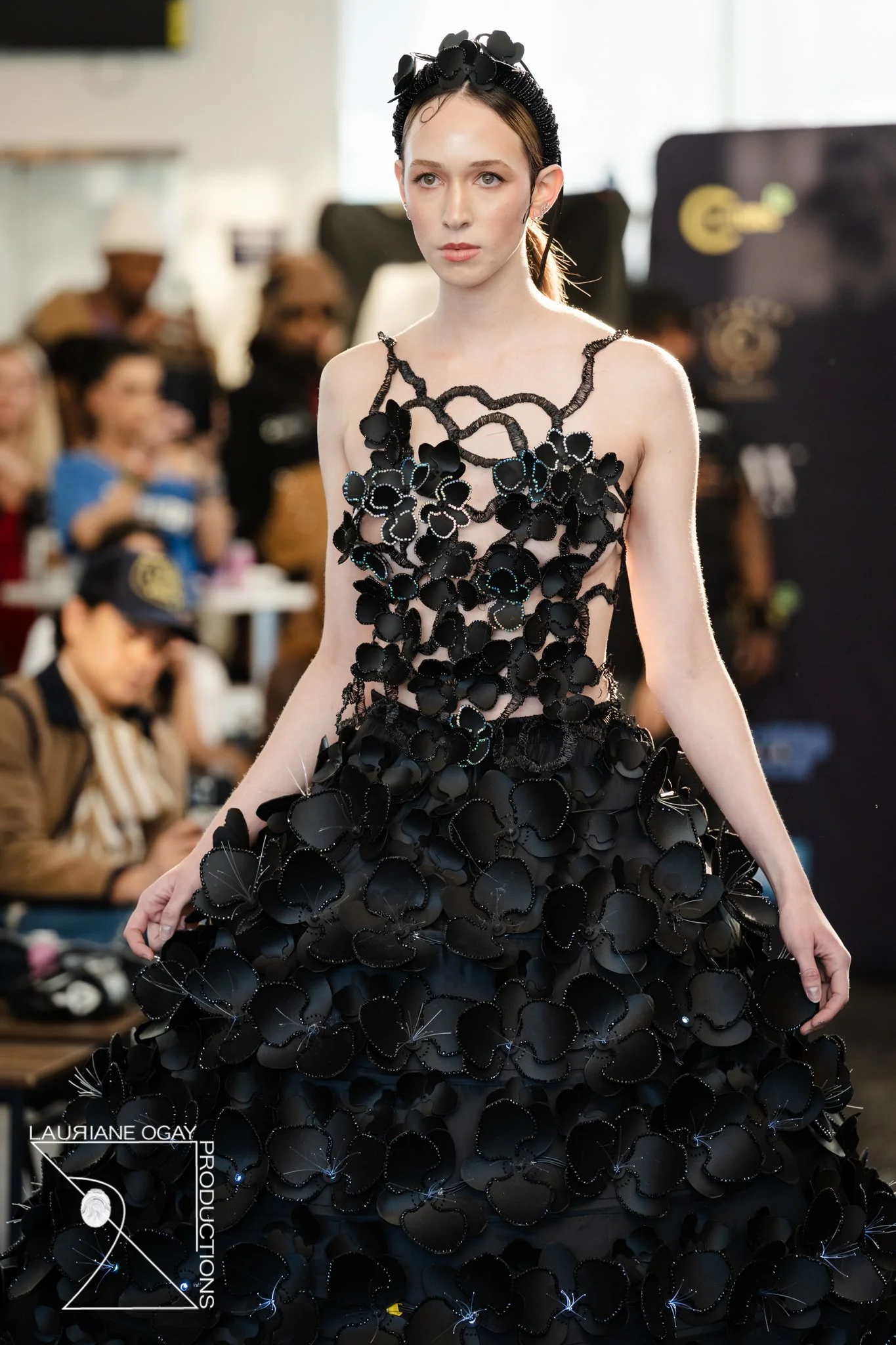
Photographs by Lauriane Ogay
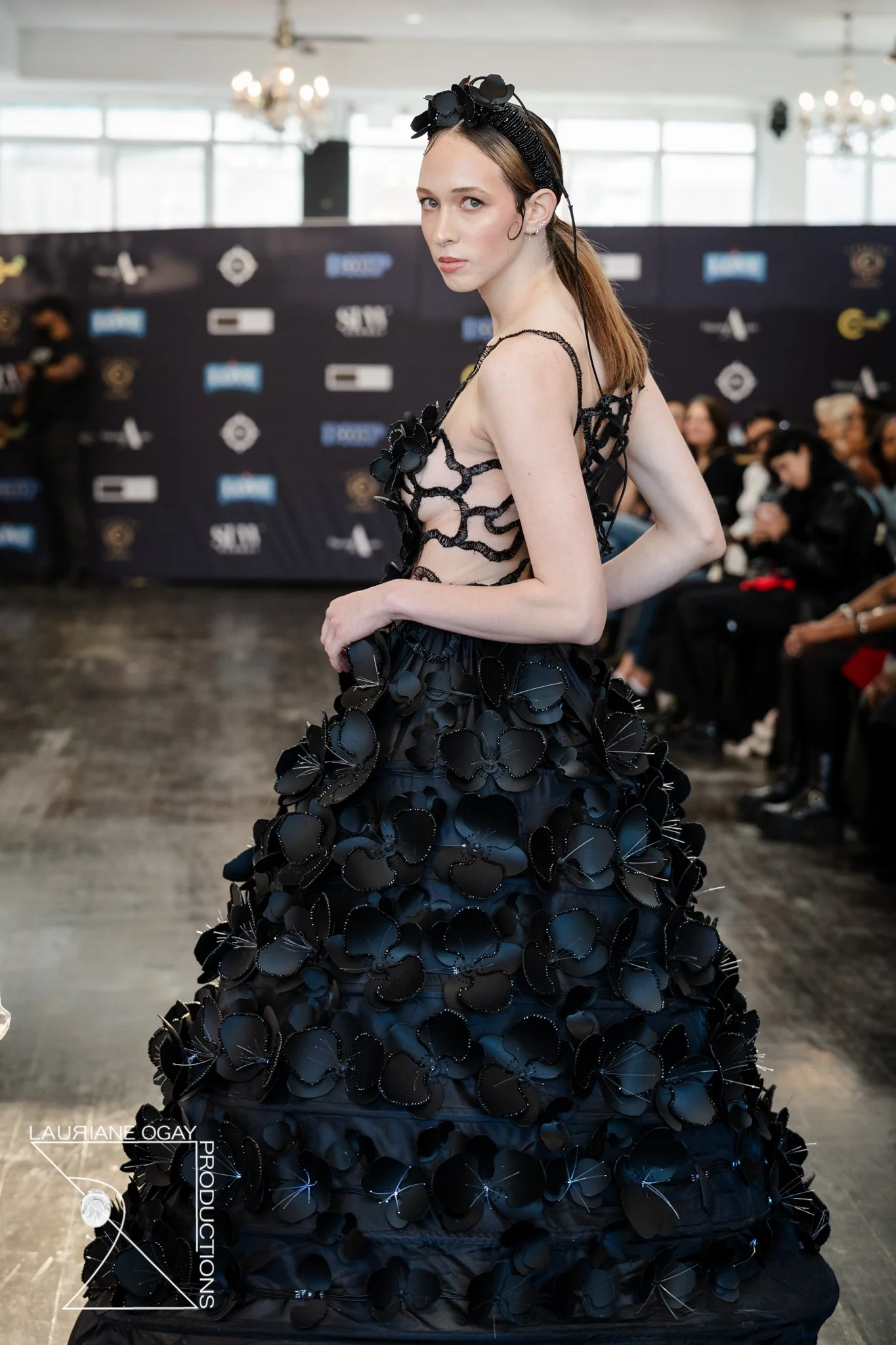
Credits
Maia Hirsch
Aliza Feffer
Felicity Grace
Juan Pelaez
Special thanks to Cornell Maker Club (Coby Lai, Parth Mittal, Modupe Ogunmekan)
Designer, Software & Hardware
Model
Model
Hardware Assistant