Maia Hirsch
Wearable Robotics & Human-Robot Interaction
Short Bio:
I am a Venezuelan robotics engineer and wearable technology designer, currently pursuing a PhD in Robotics at Cornell University. My research focuses on wearable systems, specifically the fit and grounding of sensors and actuators on the human body to enable reliable, adaptive physical interaction for human-computer interaction and haptic feedback.
My work sits at the intersection of robotics, human perception, and design. I have conducted research at Cornell’s Human Augmentation Physical Perceptual Interactions (HAPPI) Lab and Cornell Tech, where I developed wearable haptic systems and interactive garments that respond to human input. My projects have been exhibited at Panama Fashion Week and New York Fashion Week, and I have participated in national initiatives to promote STEM education, including an invitation to the Presidential Palace of Panama.
Beyond research, I share my work with a global audience of over 60,000 people, documenting the process of building wearable robotic systems and exploring how engineering and creativity can merge. Through both my research and outreach, I aim to expand how humans physically interact with technology and contribute to the future of wearable robotics.
I am a first-year PhD student in Robotics at Cornell University, where I conduct research at the Human Augmentation Physical Perceptual Interactions (HAPPI) Lab. My work focuses on wearable systems that integrate haptics, human perception, and adaptive control, with the goal of enabling more natural and physically grounded interactions between humans and technology.

Photo by Margaret Valera
Research Interests:
I design wearable technologies that combine robotics, haptics, and human perception to enable adaptive, body-integrated systems that support embodied interaction in extended reality and real-world environments.
My current work explores the fit and grounding of sensors and actuators on fabric-based systems, the development of soft actuators for haptic feedback in space and extreme environments, and the use of programmable materials for expressive and functional wearable systems.
I focus on designing lightweight, modular, and scalable wearable technologies that can reliably interface with the human body while adapting to individual users and contexts. My work integrates robotics, haptics, and human perception to create systems that are both functional and experiential.
Previous projects include the development of soft actuators for wearable haptic vests designed for social interaction, as well as robotic garments that respond to environmental and user-driven inputs. These experiences have shaped my interest in creating technologies that not only perform reliably, but also feel intuitive and meaningful to the user.
Ultimately, I aim to advance wearable technology as a medium for interaction, connection, and expression, contributing to a future where clothing serves as an active interface between humans and their environment.
Outreach:
I am committed to increasing accessibility and representation in STEM, particularly for women pursuing engineering. I share my work with an audience of over 60,000 on Instagram (@maiahirschlab), where I document the process of building wearable robotic systems and highlight the intersection of engineering and creative practice.
I have also participated in national outreach initiatives, including a campaign led by the First Lady of Panama during the World Robotics Olympics 2023, aimed at encouraging young women to pursue STEM careers. Through public speaking, social media, and interactive exhibits, I aim to demonstrate how engineering can be both impactful and creative, and to inspire the next generation of innovators.
Research and Publications

Publication Venue: ACM/IEEE International Conference on Human-Robot Interaction
Advisors: Angelique Taylor, Cornell Tech, Cornell University
While teleoperated robots have been successfully used in high-stakes domains such as firefighting and space exploration, autonomous robots that aid highstakes teamwork remain underexplored. To address this gap, we conducted a rapid prototyping process to develop a series of seemingly autonomous robot designed to assist clinical teams in the Emergency Room. We transformed a standard crash cart—which stores medical equipment and emergency supplies into a medical robotic crash cart (MCCR). The MCCR was evaluated through field deployments to assess its impact on team workload and usability, identified taxonomies of failure, and refined the MCCR in collaboration with healthcare professionals. Our work advances the understanding of robot design for high-stakes, time-sensitive settings, providing insights into useful MCCR capabilities and considerations for effective human-robot collaboration. By publicly disseminating our MCCR tutorial, we hope to encourage HRI researchers to explore the design of robots for high-stakes teamwork.

This project focused on developing a wearable haptic vest that simulates a virtual hug using soft inflatable pouches. I worked on improving the vest’s adaptability by designing a high-torque motor mechanism to adjust for various body sizes, optimizing sensor placement to ensure reliable feedback, and creating a new pouch geometry to prevent deformation. This work combined mechanical design, soft robotics, and user-centered innovation, showcasing the potential for functional and aesthetically refined wearable technology.
Advisors: Cara Nunez, Cornell University

Advisors: Thijs Roumen, Cornell Tech, Cornell University
This project focused on developing invisible fiducial markers to facilitate remote hardware debugging, conducted in the Matter of Tech Lab at Cornell Tech under the guidance of Prof. Thijs Roumen. The goal was to create markers that are invisible to the human eye but detectable by computer vision systems, enabling precise tracking and visualization of hardware components during remote debugging sessions. I worked on optimizing the markers' design for various materials and lighting conditions to ensure reliable detection without compromising the hardware's appearance. This project bridged computer vision, AR, and hardware design, enhancing the efficiency of remote debugging workflows.
Advisors: Yair Herbst and Alon Wolf, Technion - Israel Institute of Technology

The Hugo project focused on developing a haptic feedback device, with my role centered on creating a protocol to measure the device's resolution. This involved designing precise testing methods to evaluate the system’s sensitivity and accuracy in delivering tactile feedback. By analyzing the device's performance under various conditions, I contributed to refining its functionality and ensuring its capability to deliver nuanced haptic cues. This project combined haptics, engineering design, and experimental validation, advancing the understanding and performance of tactile feedback technology.
Personal Projects
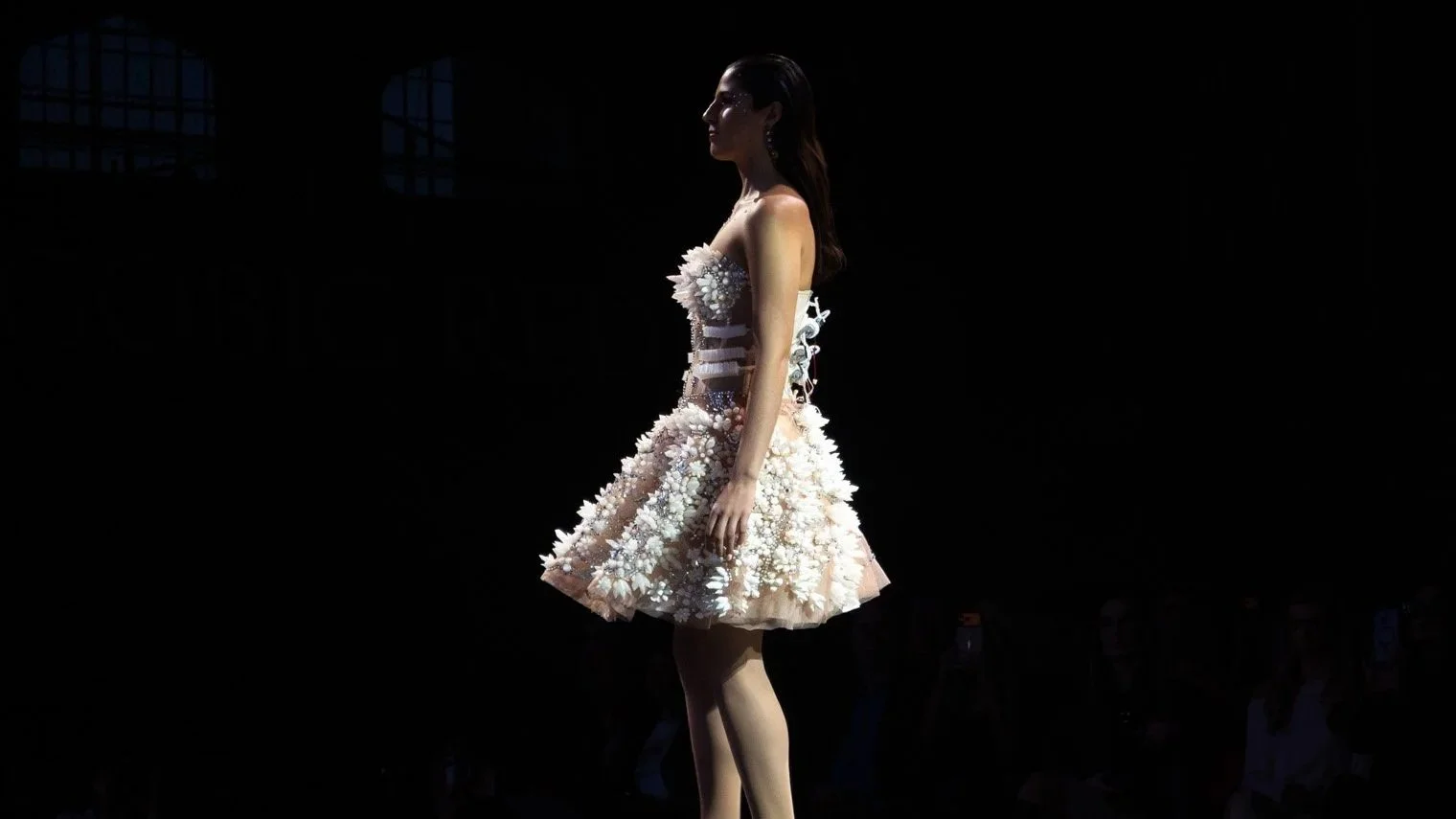
Living Crystal / 2026
An interactive wearable that questions modern fragility. Built from 3D-printed crystals and soft robotic inflatables, the garment breathes with the wearer’s heartbeat—expanding and collapsing in response to internal rhythm. Living Crystal merges engineering and design to explore a generation that appears sharp and structured, yet is quick to fracture under minimal pressure.
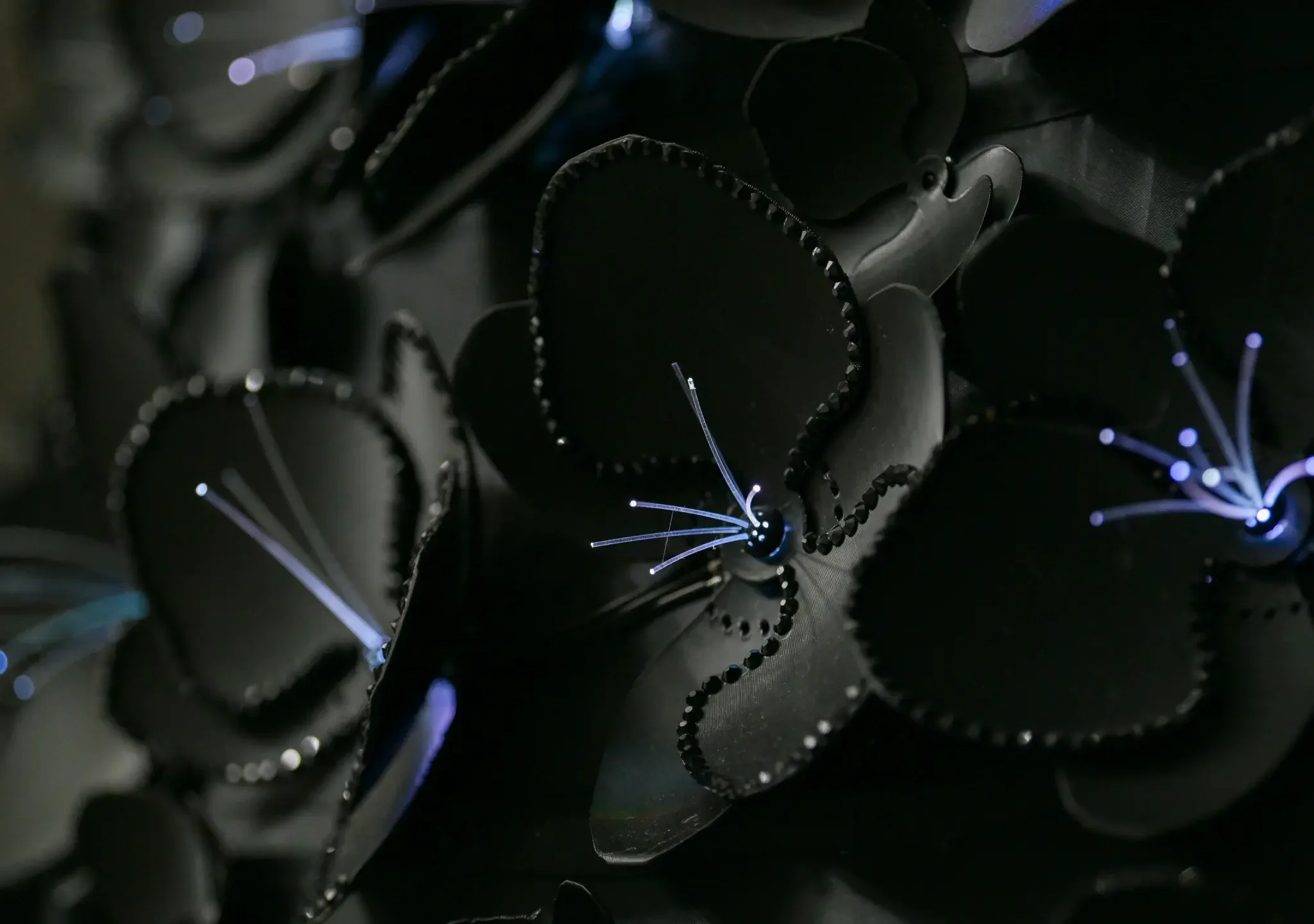
Gazing / 2026
An interactive wearable that transforms perspective into light. Composed of 3D-printed orchids and fiber optic illumination, the dress gradually reveals itself as the wearer looks upward. This project blends engineering, technology, and design to create a responsive garment that challenges how we perceive and engage with the world around us.

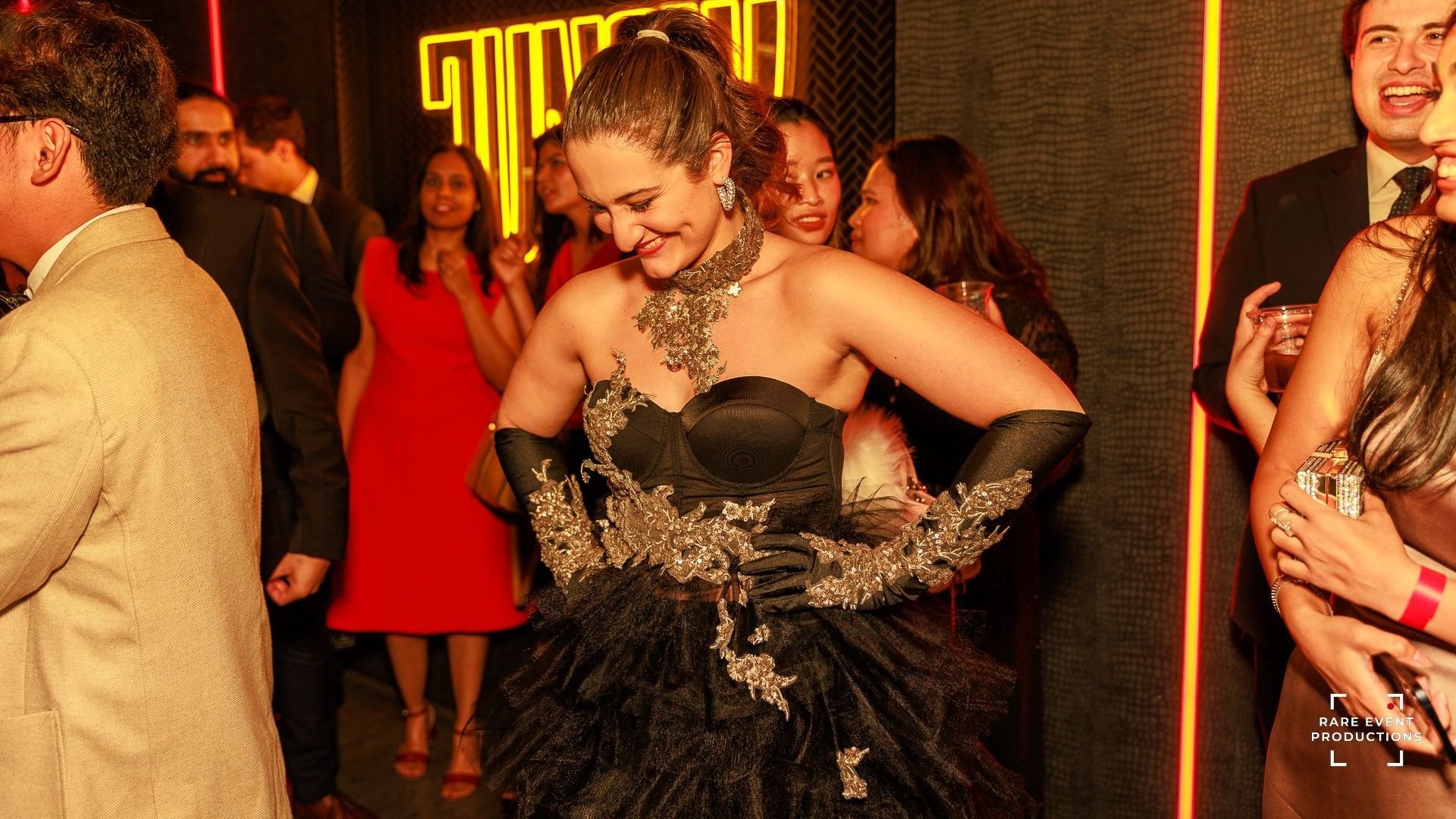
An interactive wearable that brings art and technology together. Designed with organza petals and motors, the dress blooms when someone grabs the wearer’s hand. This project combines mechanical engineering, wearable technology, and aesthetic design to create a captivating and dynamic piece of fashion innovation.

The Flower Awakens / 2024
Designed with servos and computer vision, the dress reacts to hand gestures as the flowers follow the hands rotation. This project is at the intersection of fashion and engineering, using technology to bring garments to life and create a statement piece for a milestone celebration.
This project addresses the challenge of creating intricate, three-dimensional dress designs without relying on traditional metal support structures. By leveraging additive manufacturing and 3D printing technologies, support structures were directly integrated into fabric, eliminating the need for rigid and uncomfortable metal components.
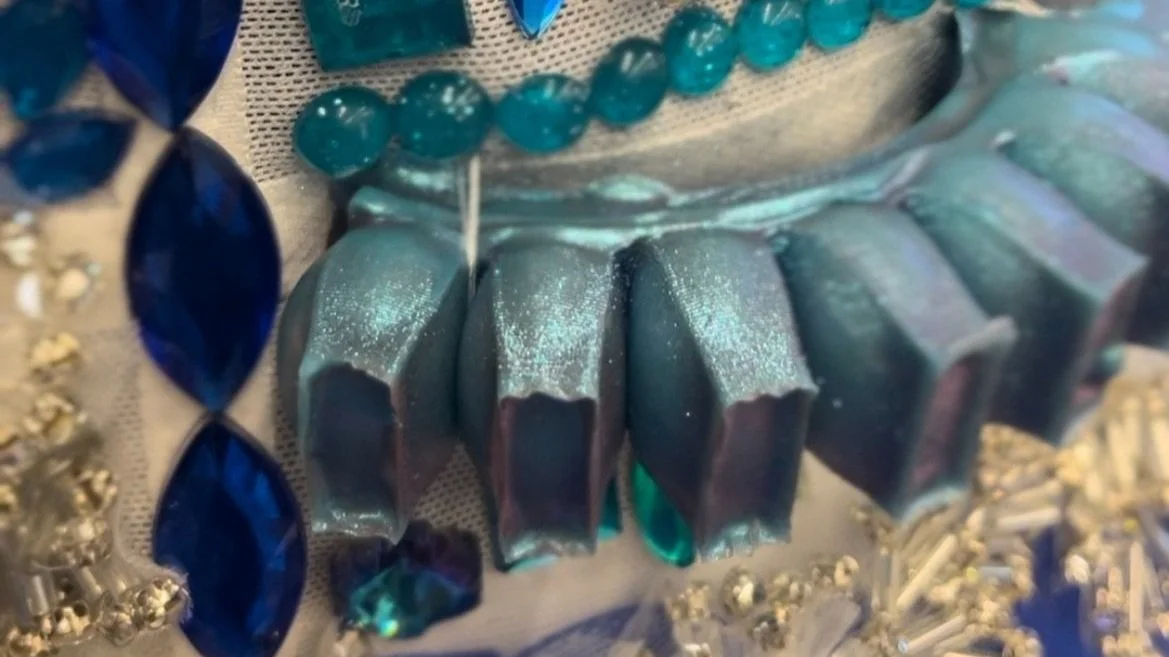
The Chrysalis dress integrates silicone-based soft robotics to create a dynamic, adaptive garment. Using lightweight, flexible structures, the dress incorporates soft robotic components that expand and contract, showcasing the potential of responsive fashion to combine comfort, functionality, and cutting-edge technology.
Press & Awards
Awards
Engineering Learning Initiative Award, Cornell University / 2024
Backslash Award, Cornell Tech / 2026
For pursuing projects that are nonlinear, unconventional, unexpected, adventurous, intense, surprising, questionable, and primed for engagement with new technologies.
For contributions to advancing undergraduate research in haptics and robotics.
For pursuing projects that are nonlinear, unconventional, unexpected, adventurous, intense, surprising, questionable, and primed for engagement with new technologies.
Backslash Award, Cornell Tech / 2024
For pursuing projects that are nonlinear, unconventional, unexpected, adventurous, intense, surprising, questionable, and primed for engagement with new technologies.
Backslash Award, Cornell Tech / 2023
1st place BME-Hack, Technion - Israel Institute of Technology / 2023
For proposing an innovative and human-centered concept for an inhaler.
Cornell Chronicle / March 2025
41st annual fashion show embraces ‘... any person ... any study’
Press
Science and Tech - The Cornell Sun / March 2025
When Fashion Meets Engineering: The Story of Maia Hirsch
Wild NYFW robo-dress by tech wiz turned designer blooms when you shake someone’s hand
Maia Hirsch Bridges The Gap Between Engineering and Fashion
SOL Collective: Where Moda Meets Tech Panel / March 2025
Exploring the intersection of fashion and technology, featuring Latinas redefining the industry through AI and robotics.
Cornell Fashion Collective (CFC) Interview
Interviewing Designers
The Digital Runway Podcast with Janey Park
Wearable Robotics & The Future of Fashion Tech with Maia Hirsch
Interview with The Garden / March 2025
“Featuring extraordinary talent”
EDGE New York Fashion Week / February 2025
this season's most innovative startups and brands redefining how we shop, style, and connect with fashion
From Robots to Runways: Maia Hirsch’s Fusion of Engineering and Fashion
Cornell Maker Club Project Demos / 2024
Providing a space where motivated and creative minds can give shape to their ideas.
Interview with Panama’s First Lady (World Robotics Olympics) / 2023
National campaign to inspire young women to pursue careers in STEM.
Presentations and Talks
Engineering Learning Initiatives Research Presentation / April 2025
India Institute of Technology Gandhinagar (IIT Gandhinagar)
Robots and Runways: Introducing Robotics into Fashion
For contributions to advancing undergraduate research in haptics and robotics.
Exhibitions
Living Crystal
Gazing Dress
Peace Offer
Gazing Dress
Open Studio at Cornell Tech
Peace Offer
2025
Cornell Fashion Collective Spring Show
Peace Offer
New York City, USA
Ithaca, New York, USA
Peace Offer
Backslash Studio at Cornell Tech
EDGE New York Fashion Week
Peace Offer
New York City, USA
New York City, USA
Open Studio at Cornell Tech
No Poking Metals
2023
New York City, USA
Open Studio at Cornell Tech
Chrysalis
New York City, USA
Ithaca, New York, USA
Ithaca, New York, USA
New York City, USA
New York City, USA
2026
Cornell Fashion Collective Spring Show
Cornell Fashion Collective Spring Show
SFW Runway New York Fashion Week
SFW Runway New York Fashion Week