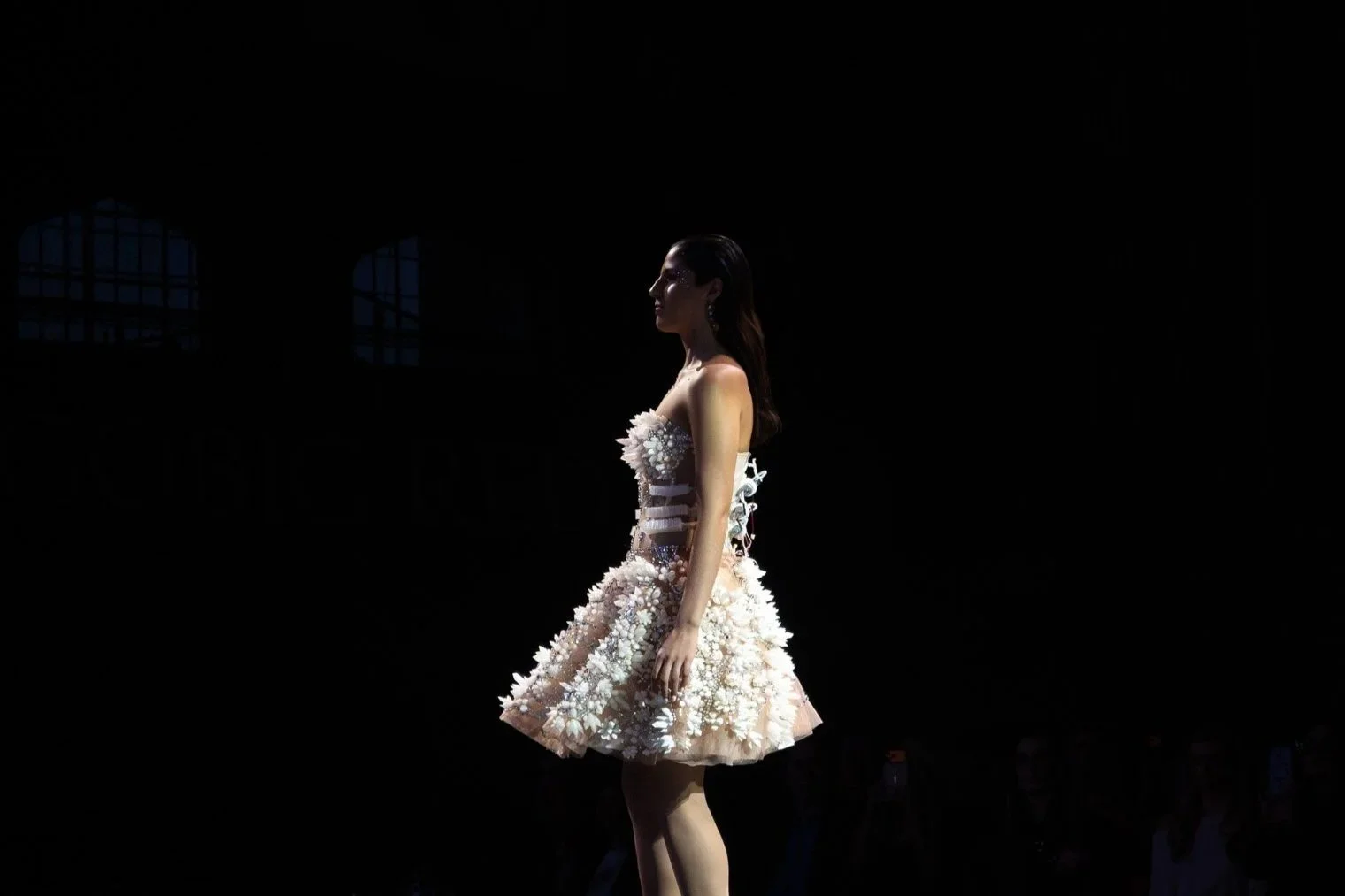
Living Crystal
2026
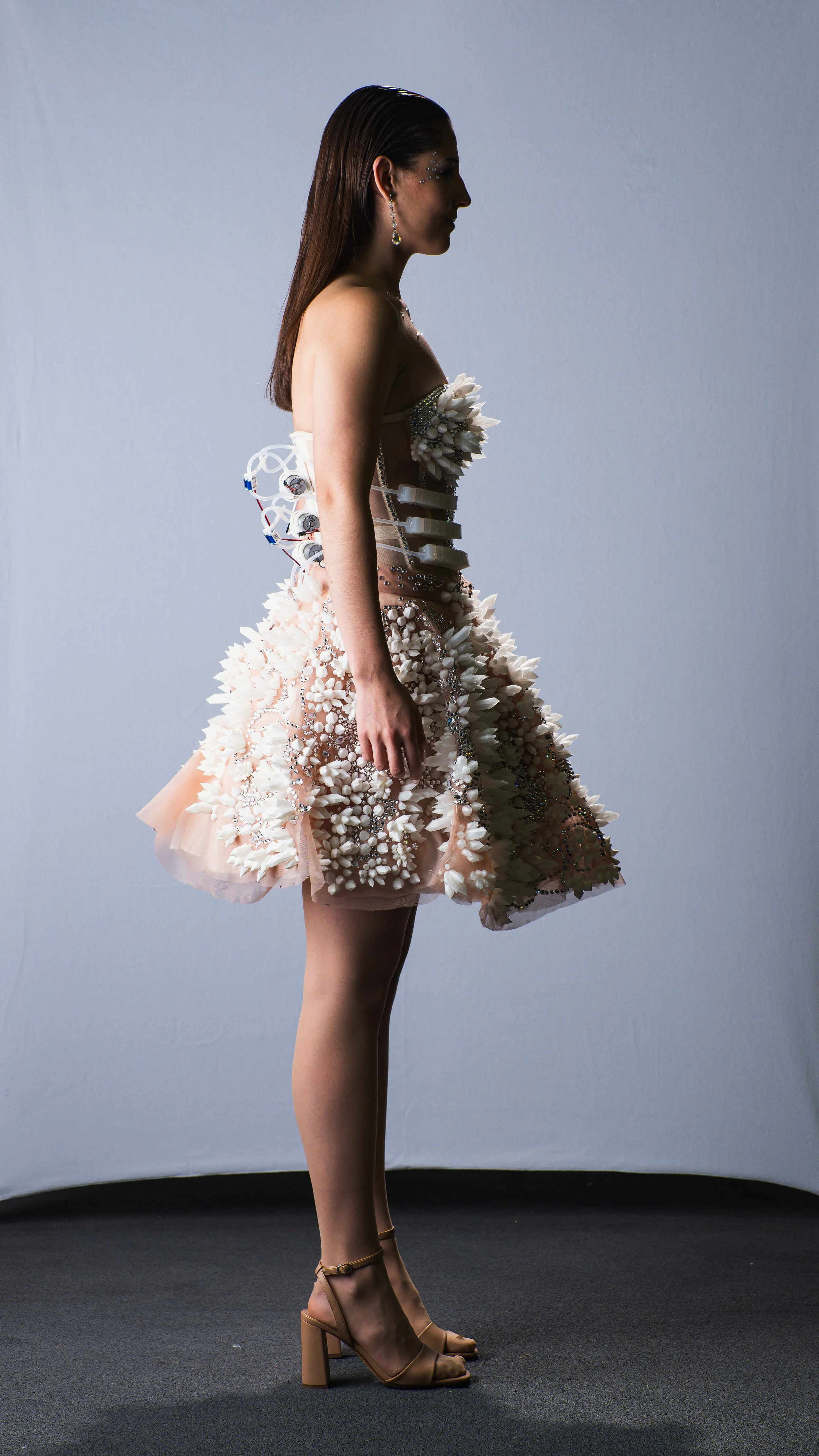
Living Crystal is an interactive wearable that expands and contracts in sync with the wearer’s heartbeat, reflecting on a generation that appears structured, yet can fracture under even minimal pressure. This project is funded by Backslash at Cornell Tech and debuted at the Cornell Fashion Collective Spring 2026 Show.
How quickly can discomfort be labeled as harm? how easily can disagreement lead to collapse rather than dialogue? Moments that should build resilience and expansion, instead seem to break it.
Crystals are formed under immense pressure: structured, precise and visually strong. Yet that same structure makes them inherently brittle. They do not bend; they fracture.
This piece is a breathing structure, expanding and contracting in sync with the wearer’s heartbeat. What appears rigid and composed is, in reality, constantly fluctuating. The garment reflects a generation that presents itself as defined and expressive, yet struggles to tolerate expression from others when it challenges its own.
The garment responds to the wearer’s internal state through a heartbeat-driven system, allowing physiological signals to directly influence its behavior. As the wearer’s heart rate changes, the dress begins to expand and contract, creating a slow, breathing-like motion that makes the body’s internal rhythm visible.
Rather than acting as a static structure, th epiece is constantly in flux. It does not require an external trigger; instead, it is driven by the wearer’s own body. This interaction transforms an invisible biological signal into a physical, evolving experience - where emotion an physilogy become part of the garment itself.
The dress is constructed using a combination of additive manufacturing and soft robotic fabrication techniques. The crystalline structures are 3D printed using a hybrid process, embedding layers of tulle within rigid forms to create a constrast between structure and softness. Each crystal panel is hand-finished with beadwork, enhacing texture and light interaction.
The inflatable components are fabricated by casting silicone into 3D-printed molds, forming soft structures capable of repeated expansion and contraction. These elements are integrated within the garment to create smooth, organic motion.
The system is powered by a network of pumps, valves, and vacuum control, creating a living, breathing form.
Cornell Fashion Collective Spring 2026
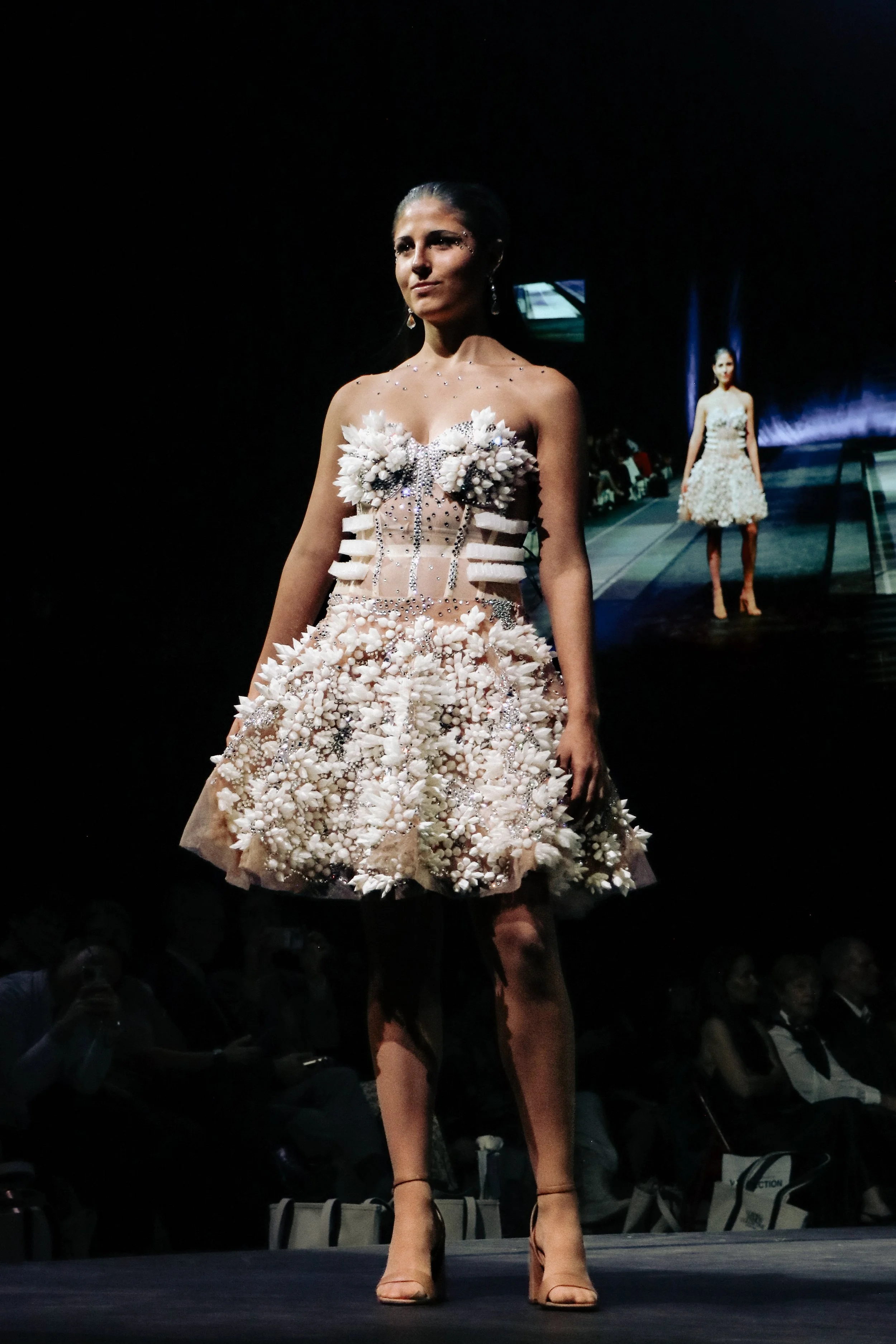
Photograph by Julia Choi
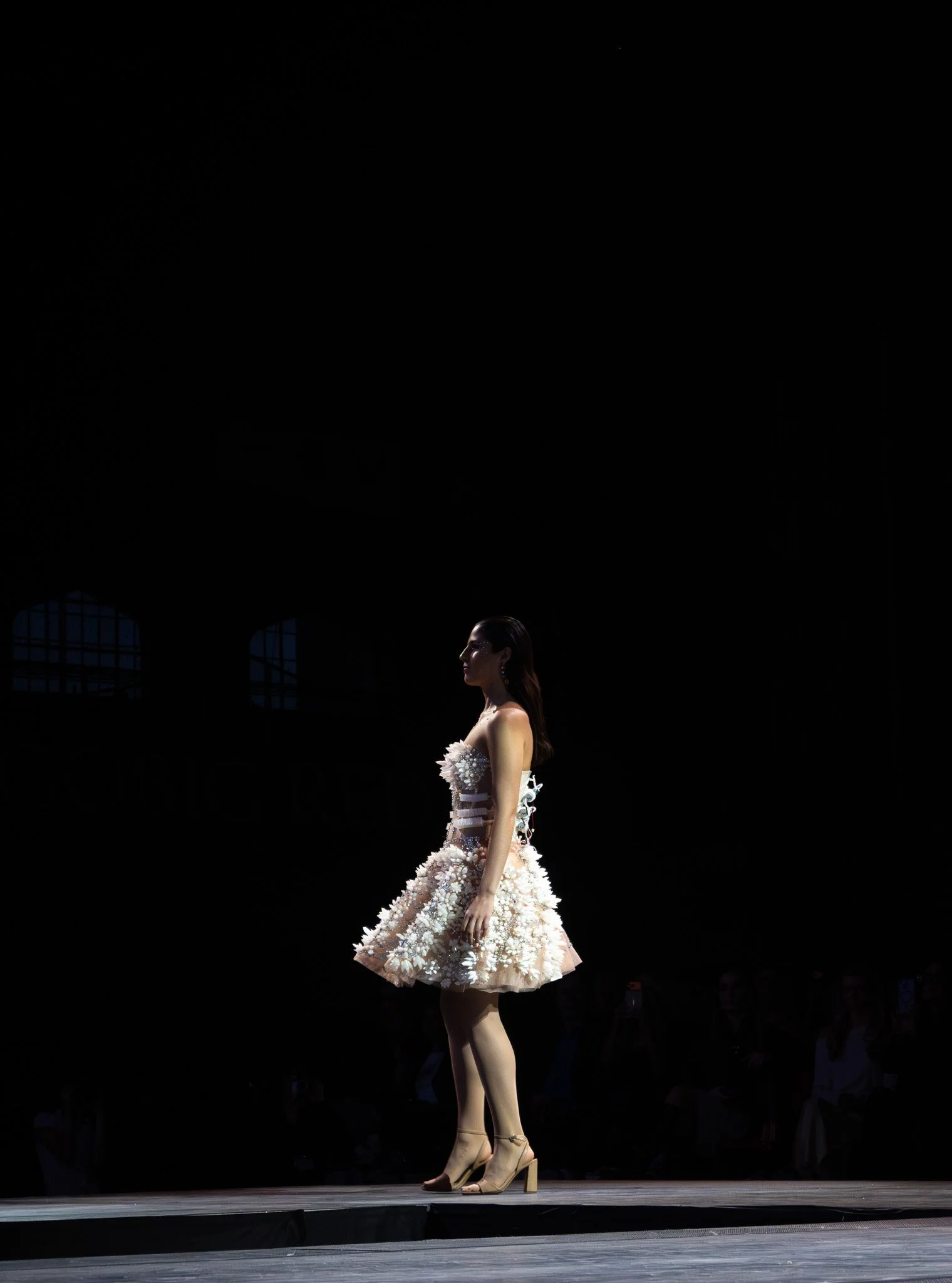
Photograph by Alex Lau
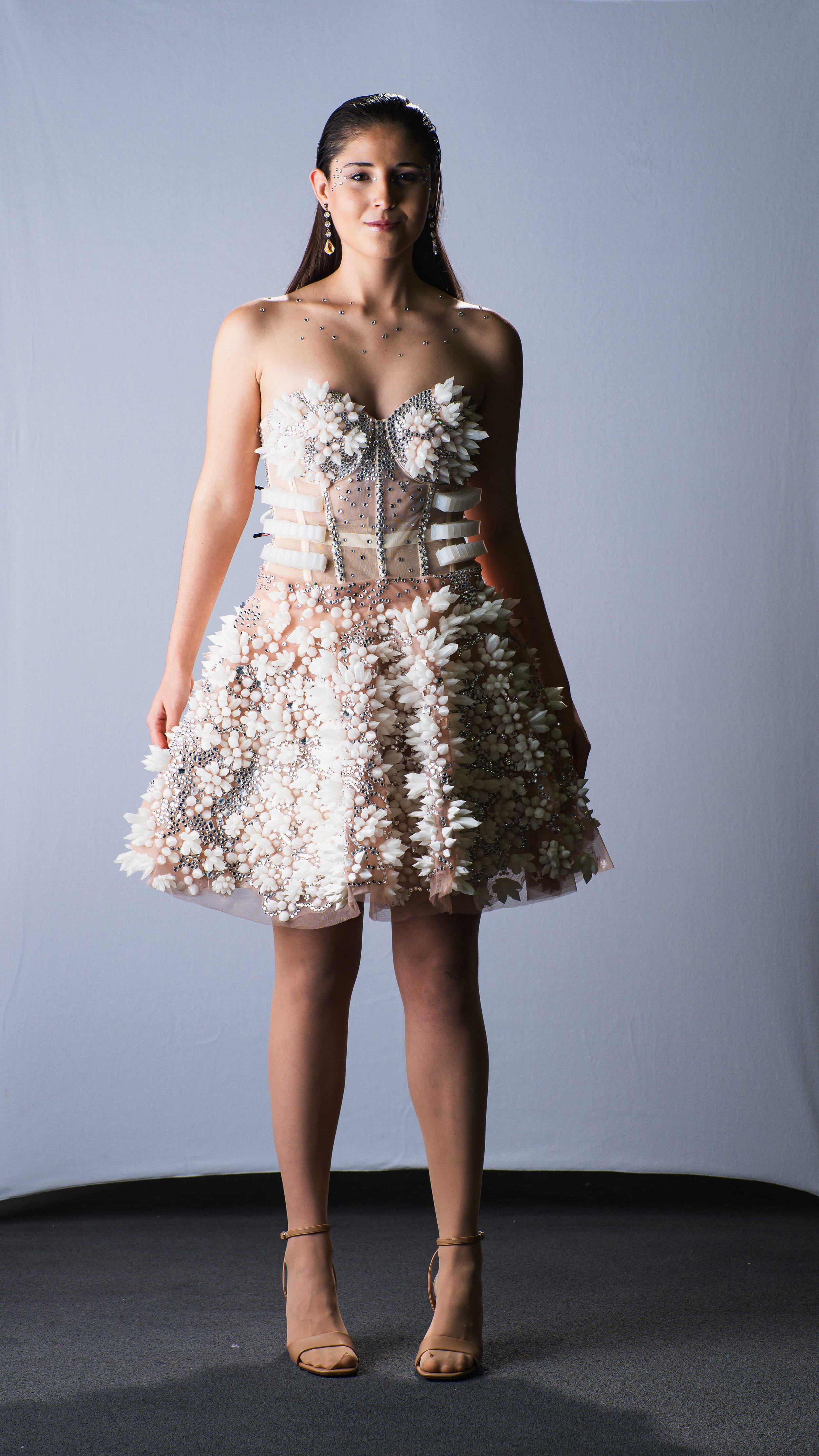
Photograph by Eli Brown
Credits
Maia Hirsch
Allegra Gonzalez
Juan Pelaez
Special thanks to Cornell Maker Club (Coby Lai, Parth Mittal, Modupe Ogunmekan)
Designer, Software & Hardware
Model
Hardware Assistant